



Silent battles
Trauma, Abuse, Suicide and Healing
Silent Battles: Trauma, Abuse, Suicide & Healing
Mental health struggles affect millions of people around the world every day. Behind many smiles are silent battles involving emotional pain, trauma, abuse, anxiety, depression, post-traumatic stress disorder (PTSD), and thoughts of suicide. Men, women, and even young people often suffer in silence, afraid of judgment, rejection, or being misunderstood. It is important that society begins to speak openly and honestly about mental health, abuse, trauma, and the healing process.
Understanding Mental and Emotional Trauma
Trauma can come from many experiences, including childhood abuse, domestic violence, bullying, sexual assault, abandonment, war, loss of loved ones, accidents, or emotional neglect. Trauma affects the mind, body, emotions, and spirit. Some people carry emotional wounds for years without ever speaking about them.
When trauma is left untreated, it can lead to depression, anxiety disorders, panic attacks, addiction, self-harm, and suicidal thoughts. Many people appear strong on the outside while suffering deeply internally.
Male Suicide and Mental Health
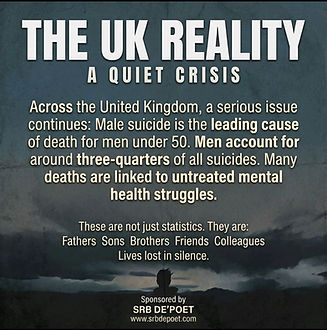
Male suicide continues to rise globally, with many men struggling under the pressure to appear strong, emotionally controlled, and resilient at all times. Society has often taught men to suppress emotion, avoid vulnerability, and “deal with problems alone.” As a result, many men suffer silently until the emotional burden becomes overwhelming.
Men experiencing depression or trauma may show signs through anger, withdrawal, substance abuse, reckless behaviour, or emotional isolation rather than openly expressing sadness. Unfortunately, many men never seek help because they fear shame or judgment.
Breaking the stigma surrounding male mental health is essential. Real strength is not hiding pain, real strength is having the courage to speak, seek help, and heal.
Female Suicide, Abuse, and Emotional Pain
Women also face immense emotional struggles, often connected to domestic abuse, sexual violence, emotional manipulation, childhood trauma, relationship breakdowns, and overwhelming life pressures. Many women suffer silently while caring for others, carrying emotional burdens behind closed doors.
Abuse can destroy self-worth and leave lasting emotional scars. Victims often experience fear, anxiety, depression, PTSD, insomnia, and feelings of hopelessness. In severe cases, unresolved trauma may lead to suicidal thoughts or emotional breakdowns.
Women deserve safe spaces, support systems, protection, and access to healing without fear of being blamed or ignored.
The Reality of Abuse
Abuse is not always physical. It can be emotional, verbal, psychological, financial, or sexual. Emotional abuse can damage a person’s confidence, identity, and mental wellbeing over time. Manipulation, intimidation, humiliation, threats, and isolation are forms of abuse that often go unnoticed by others.
Victims of abuse may struggle with trust, fear, panic attacks, emotional numbness, and difficulty maintaining healthy relationships. Abuse changes the way people view themselves and the world around them.
No one deserves abuse. Every individual deserves dignity, safety, respect, and compassion.
Understanding PTSD
Post-Traumatic Stress Disorder (PTSD) is a serious mental health condition that develops after experiencing or witnessing traumatic events. PTSD can affect military veterans, abuse survivors, emergency responders, victims of violence, and anyone exposed to severe emotional distress.
Symptoms of PTSD may include:
-
Flashbacks and nightmares
-
Anxiety and panic attacks
-
Emotional numbness
-
Hypervigilance and fear
-
Difficulty sleeping
-
Isolation from others
-
Anger or emotional outbursts
-
Depression and hopelessness
PTSD is not weakness. It is the mind and body responding to overwhelming trauma. Healing takes time, understanding, support, and professional guidance.
Suicide: The Silent Cry for Help
Suicide is often the result of deep emotional pain, hopelessness, trauma, loneliness, or feeling trapped without support. Many people who consider suicide do not truly want to die, they want the pain to stop.
Warning signs may include:
-
Withdrawal from family and friends
-
Sudden mood changes
-
Talking about hopelessness
-
Giving away belongings
-
Increased alcohol or drug use
-
Loss of interest in life
-
Expressions of feeling worthless or trapped
Listening without judgment can save lives. Compassion, support, and timely intervention are powerful tools in suicide prevention.
The Importance of Healing
Healing is possible. Recovery does not happen overnight, but every step forward matters. Healing begins when people feel safe enough to speak, seek help, and confront their pain.
Healing may involve:
-
Therapy and counselling
-
Support groups
-
Faith and spirituality
-
Exercise and healthy living
-
Creative expression
-
Meditation and mindfulness
-
Building healthy relationships
-
Learning self-worth and self-care
There is no shame in seeking help. Emotional wounds deserve treatment just as physical injuries do.
Creating a More Compassionate Society
Society must become more compassionate, understanding, and supportive toward mental health struggles. We must encourage open conversations about trauma, abuse, suicide, and healing without stigma or shame.
Checking on loved ones, listening with empathy, supporting survivors, and encouraging professional help can make a life-changing difference. Every person deserves hope, support, and the opportunity to heal.
No matter how dark life may feel, healing is possible. Pain does not have to define a person’s future. Survivors of trauma and abuse are not broken, they are human beings carrying invisible wounds that deserve understanding and care.
If you or someone you know is struggling with suicidal thoughts, trauma, abuse, or PTSD, please seek support. Speaking up is not weakness. It is the beginning of healing, strength, and recovery.